Showing posts with label esg domains. Show all posts

Friday, 26 July 2024

AI Powered ESG Compliance

 Background: Wider recognition that climate risks affect business and financial performance of companies has resulted in the growing importance of climate disclosures for investors.  In the US the Securities and Exchange Commission (SEC) has published rules and guidance about disclosing impacts of climate change on companies’ performance.  Disclosures facilitate investors’ assessment of companies’ performance by ensuring consistent, comparable and reliable information about financial effects of climate risks on a company’s business and how the company manages such risk.  Accordingly, companies, Mutual Funds (MF) and Exchange traded Funds (ETFs) are required to file disclosures on climate-related information to SEC. 
Streamlining Compliance Monitoring: Automation in Green Investment ETFs

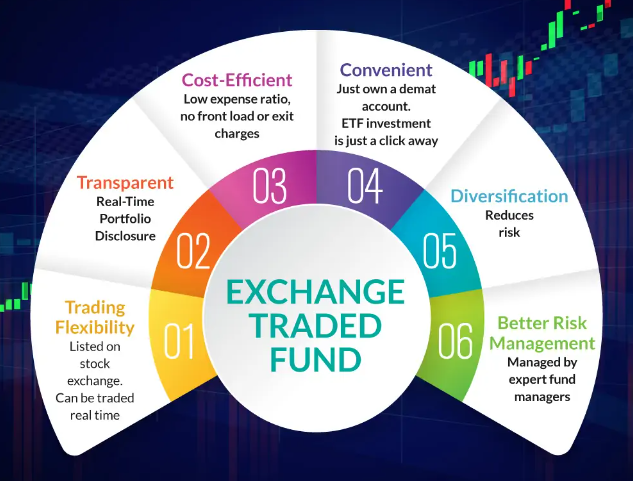
ETFs are a major player in the so-called Green investments where the investments by ETFs target companies that only meet the climate policies and guidelines set by the ETFs.  These policies and guidelines are discussed in the ETF prospectuses meant for the investors.

The climate disclosures are at the heart of two critical business scenarios for the ETFs:

  1. Due-diligence in selecting a stock/ security for investment
  2. Monitoring compliance

These scenarios involve analyzing large volumes of documents that include SEC filings, fund prospectuses, business financial news, social media, etc.  Yet, to date, automation support has been lacking especially considering the need for analysts to understand the text in the various documents.

Next-Generation NLP Techniques: GraphRAG in Document Analysis

Over the course of last year, a promising solution that uses LLMs and dense Vector databases for storing and retrieving the answers to natural language questions had experienced an upsurge in its adoption for use cases described in this blog.  More recently, though, a newer, sophisticated technique touted GraphRAG – Graph based Retrieval augmented generation method has shown higher accuracy results and surpassed RAG in the overall effectiveness to the use cases involving large corpus of documents such as discussed in this blog. GraphRAG is an upgrade to RAG.

The New AI – Generative AI and Knowledge Graphs to the rescue:  

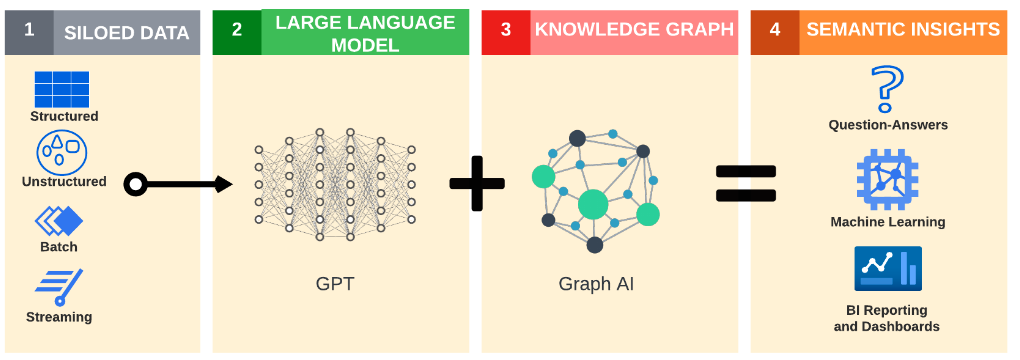
The new AI which is a hybrid over Generative AI (Large Language Models or LLM) together with Knowledge Graphs (ex: GraphRAG) has proven to be practical and valuable in complex business workflows while producing results that are accurate and explainable. TextDistil from Lead Semantics, a language understanding solution built with the new AI stack, targets the two business scenarios listed above; 1) ESG compliant stock selection and 2) Due-diligence of ESG disclosure compliance.

TextDistil processes unstructured data in the form of news articles, SEC filings, blogs, industry reviews, and ETF prospectuses and populates the extracted details into the domain specific knowledge graph.  It features an easy to use natural language search and allows for instant verifiability of answers. TextDistil significantly improves the speed and accuracy of analysis.

Send us an email or contact us to checkout TextDistil for automating your ESG Compliance monitoring and ESG Due-diligence.

Tuesday, 23 July 2024

NLP a Powerful Tool for ESG INVESTING

Environmental, Social, and Governance (ESG) factors are now widely recognized as important drivers of long-term financial performance, and investors are increasingly seeking to integrate ESG considerations into their decision-making process.

To that end, Natural Language Processing (NLP) has emerged as a powerful tool for analyzing ESG data and providing valuable insights to investors. NLP is a subfield of artificial intelligence that deals with the interactions between computers and human languages, and it can be applied to various text data related to ESG, such as news articles, social media posts, financial reports, and other sources.

Here are some ways in which NLP can be used to analyze ESG data and inform sustainable investing decisions:

  • Sentiment Analysis: 

NLP can be used to analyze the sentiment of ESG-related news articles and social media posts to understand public opinion on ESG issues. By tracking sentiment over time, investors can identify potential risks and opportunities associated with certain ESG factors, and adjust their investment strategies accordingly.

  •  Topic Modeling:
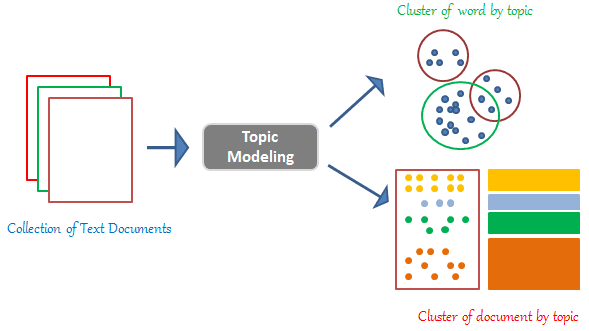
    NLP can be used to identify and categorize ESG-related topics in large volumes of text data. This can help investors understand which ESG issues are most relevant and how they are interconnected. For instance, topic modeling can reveal that climate change and renewable energy are closely linked, and that they have significant implications for companies operating in the energy sector.
semantic web companies text-based knowledge
  • Entity Recognition:
    NLP can be used to identify and categorize specific entities mentioned in ESG-related text data, such as companies, people, or locations. By tracking the ESG performance of specific entities over time, investors can assess their ESG risks and opportunities, and make informed investment decisions.
 
  • Event Detection:
    NLP can be used to identify significant events related to ESG, such as environmental disasters, corporate scandals, or regulatory changes. By monitoring ESG events in real-time, investors can adjust their investment strategies to mitigate potential risks and seize opportunities.


  • Text Classification:
    NLP can be used to classify ESG-related text data into categories such as environmental impact, social responsibility, or corporate governance. This can help investors understand which ESG factors are most important to them and make investment decisions accordingly.


Overall, NLP is a powerful tool that can help investors make more informed decisions about sustainable investing by analyzing large volumes of ESG-related text data and providing valuable insights into ESG sentiment, topics, entities, events, and classifications. As ESG investing continues to grow in importance, NLP is likely to play an increasingly important role in shaping the future of sustainable investing.